
The Silver Town in the Desert
Tombstone is located in the American state of Arizona, in Cochise County, not far from the Mexican border. It was founded in 1879 by a prospector named Ed Schieffelin after he discovered rich silver deposits in the area. His friends warned him that the only stone he would ever find there would be his tombstone, because of the frequent clashes with Apache Indians. Nevertheless, Schieffelin named the town Tombstone, and the grim predictions did not come true — silver was discovered in enormous quantities.
During the 1880s, local mines produced between 40 and 85 million dollars’ worth of silver, making Tombstone the largest producer in Arizona. From its modest beginnings with just one hundred residents living in forty shacks, the town grew to a population of 14,000 within less than seven years. According to the 2020 census, only 1,308 people live there today.
In its heyday, Tombstone boasted around a hundred saloons, several theaters, fourteen gambling halls, dance halls, and brothels. The newspaper The Nugget was founded in 1879, followed soon after by The Tombstone Epitaph — the oldest continuously published newspaper in Arizona, which is still in circulation today.
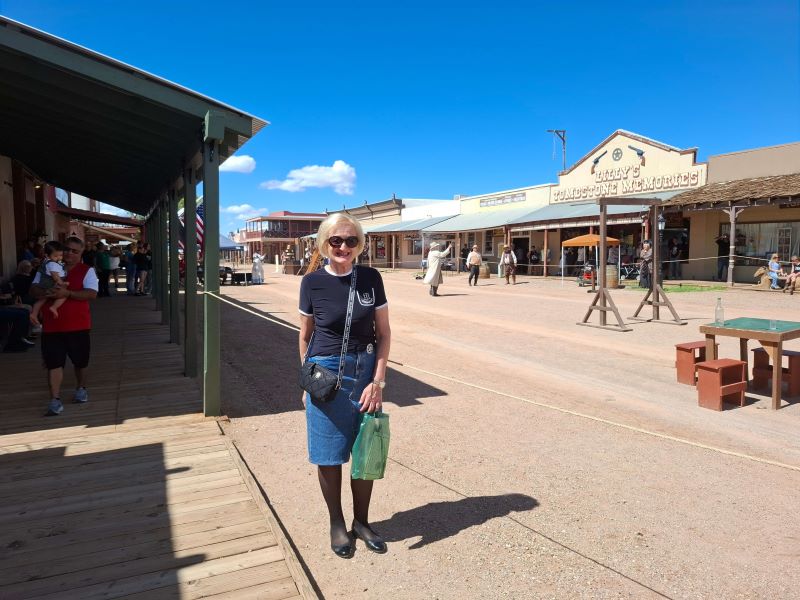
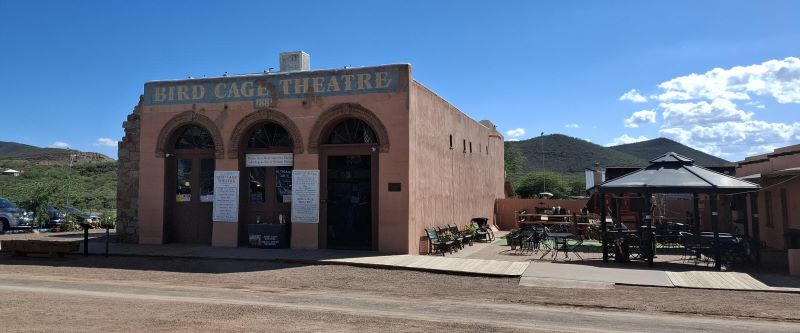
Bird Cage Theatre – The “Wildest” on the Wild West
The town was not only a haven for miners and cowboys. Tombstone also had elegant restaurants, four churches, and Schieffelin Hall – an opera house and venue for cultural events. Yet, miners and cowboys most often gathered at the Bird Cage Theatre, which The New York Times at the time described as the “wildest” place in town.
The Bird Cage operated nonstop — 24 hours a day, 365 days a year — until it finally closed in 1889. It has been preserved almost entirely in its original state and today serves as a museum. Historical records mention sixteen murders that took place within its walls, and visitors can still see bullet holes scattered around the building.
In the basement, the longest poker game in history took place. With players constantly changing, the game lasted eight years, five months, and three days — exactly as long as the theater itself remained open. Originally envisioned as a concert hall and theater, the Bird Cage gradually turned into a saloon, gambling den, dance hall, brothel, and stage — all in one.
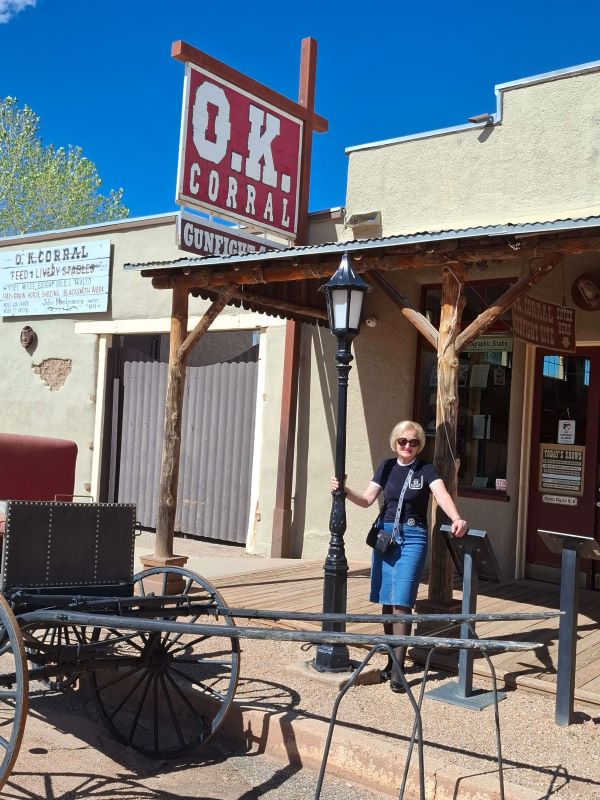
The Legendary Gunfight at the O.K. Corral
The fateful day of October 26, 1881, went down in the history of the Wild West. The gunfight at the O.K. Corral took place in an alley next to Fly’s Photography Studio, near the Old Kindersley Corral, a horse enclosure owned by John Montgomery.
At that time, Tombstone was a center of political and economic disputes over control of gambling halls, liquor trade, cattle business, and the election for sheriff. Stagecoach robberies carrying silver bullion were becoming more frequent, and drivers were often killed. Deputy Sheriff Virgil Earp, together with his brothers Morgan and Wyatt Earp and the dentist-turned-gunslinger Doc Holliday, pursued the cowboys who dominated the surrounding area.
The confrontation broke out with the McLaury and Clanton brothers. The shootout lasted about thirty seconds, leaving three cowboys dead and Morgan and Virgil Earp wounded. Although the Earps stood on the side of the law, newspapers turned the event into a sensation. The consequences were far-reaching: European investors withdrew, the planned railroad bypassed Tombstone, and the town became even more isolated.
Interestingly, when a great fire broke out shortly after the gunfight, almost the entire town burned down — except for the wooden sign that read “O.K. Corral,” which miraculously survived and still exists today.
Croats in Tombstone at the Time of the Gunfight
By the late 19th century, Arizona had become attractive to Croatian immigrants as well. Many of them settled in mining centers such as Bisbee, where dozens of Croats are recorded on local cemetery registers, and in Globe, about 300 kilometers (roughly 185 miles) farther north. A few of them also happened to be in Tombstone at the time of the gunfight at the O.K. Corral.
Among the earliest names listed in the voter rolls of Cochise County’s so-called Great Register were miner Stephen Crstovich (Stjepo Krstović) from Tivat, registered on August 2, 1880, and thirty-four-year-old miner Christopher Bonacich (Krsto Bonačić) from Milna, registered in 1881, both residing in Tombstone.
Other names mentioned include John Bogovich (Ivan Bogović), naturalized in San Francisco in 1872 and listed as a cook in Tombstone in 1884, and Spiro Covacevich (Špiro Kovačević), a twenty-six-year-old miner from Stari Grad, naturalized in Sierra Nevada in 1882 and also registered in Tombstone in 1884.
It is unclear whether the latter two were already there during the gunfight, though it is possible, since elections—on which such voter lists were based—were not held frequently. All of them were listed as having Austrian nationality, as both the Bay of Kotor and Dalmatia were at that time part of Austria-Hungary.
The Berčić Family – The Most Enduring Legacy
The most detailed records concern the Berčić family, about whom Alison Bunting wrote an article published on June 6, 2025, in the Patagonia Regional Times, titled Glimpses Into Our Past: The Bercich Family.
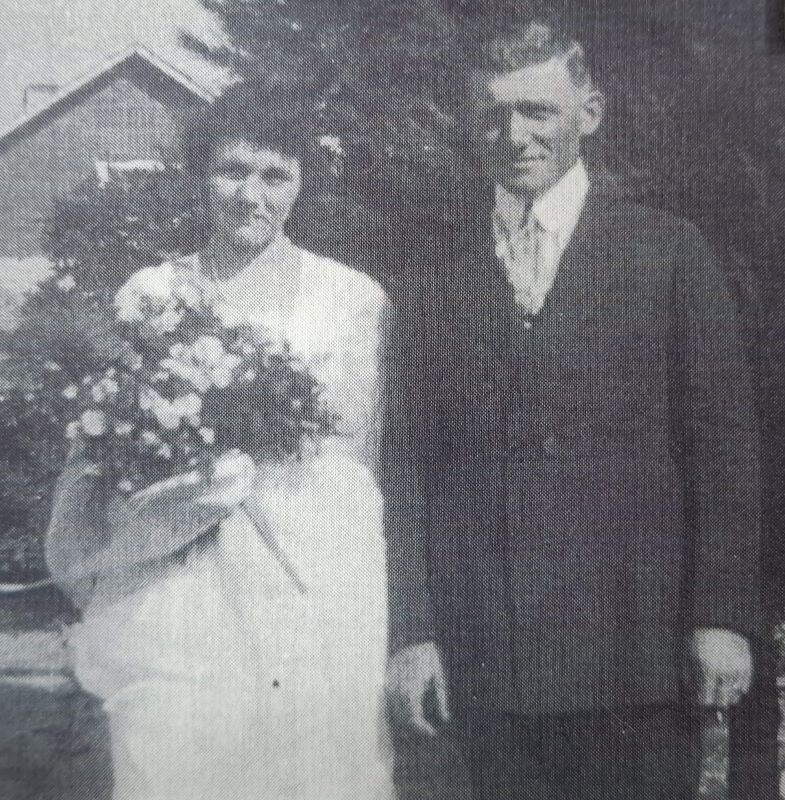
Their story began before the famous gunfight, with the arrival of miner Nikola Ante Berčić (Nicholas Anthony Bercich, 1838–1899) and his wife Katarina (Kate, née Bonačić, 1854–1939) in Tombstone in 1880. Nikola had been naturalized in Nevada in 1874, and with them came Ivan (John) Berčić, also naturalized in Nevada, but in 1876.
In 1884, the family purchased Bercich Ranch in the San Rafael Valley, where they raised livestock, cultivated orchards, and grew crops, supplying nearby mining camps and the military post at Fort Huachuca. Their neighbor, rancher Colin Cameron, tried to seize their land by force and even falsely accused Nikola of stealing a window. The Tucson court acquitted Nikola and harshly condemned Cameron — a case reported by the Arizona Daily Star on March 17, 1898.
Nikola died in 1889, and Kate continued to run the ranch and raise their six children: Martha (1879–1973), Mary (1883–1893), Tinina (1888–1966), Katherine (1894–1982), Nicholas Jr. (1897–1939), and George (1899–1982).
Daughters Martha and Mary married local ranchers, and their properties eventually became part of the Bercich Ranch. Sons Nicholas and George took over management of the estate.
Nicholas married a schoolteacher, Maude McCorkindale, and, in addition to working on the ranch, he was employed by the Greene Cattle Company and later joined the Border Patrol, eventually becoming the station manager in Nogales.
George married Maude’s sister, Bessie McCorkindale. They had two children, and George ran both the Bercich Ranch and the neighboring Lone Mountain Ranch. In the early 1940s, he even served as Santa Cruz County Supervisor.
George’s son Bud Bercich (born 1937) attended school in Parker Canyon, Lochiel, and Patagonia, later studying at the University of Arizona, where his roping skills earned him the title All Around Cowboy. He competed in the Professional Rodeo Cowboys Association, worked in road construction, and returned to the ranch in 1976 to help his parents. Today, though in advanced years, he still runs the ranch together with his wife, Carrol Bercich.
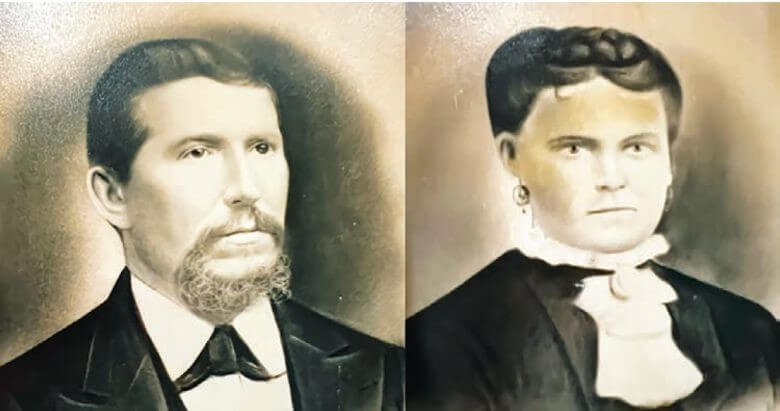
Kate and Nicholas Bercich in 1880
Maude and Nick Bercich in 1920
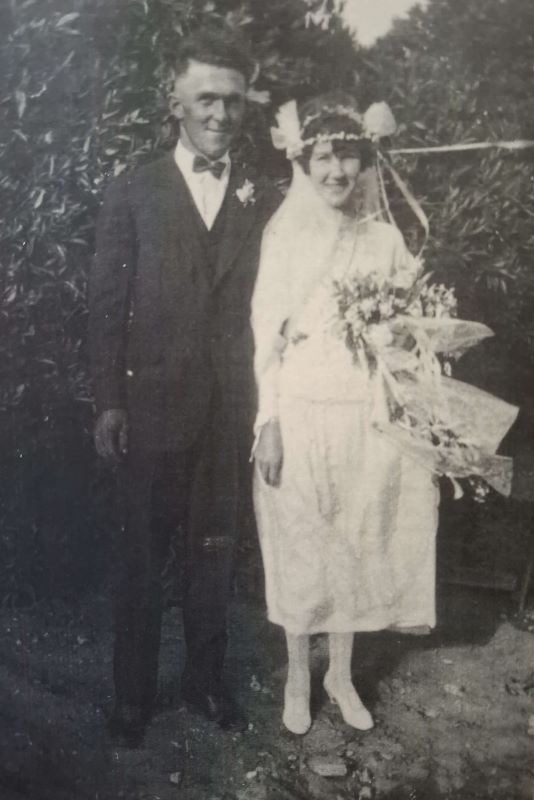
Bess and George Bercich in 1925
Croats in the Legend of the Wild West
Although the gunfight at the O.K. Corral entered world history and the mythology of the Wild West, our people remained in its shadow. Some of them left a lasting mark, such as the Bercich family, whose ranch has endured for 141 years. Others are remembered only through scattered records — in voter lists or naturalization documents.
It is, however, a fascinating curiosity that at the very moment Tombstone became a legend, Croats were living there too. In that way, even if only in traces, our history became part of the chronicle of the most famous gunfight in the Wild West.
Patagonia in Arizona
The previously mentioned Patagonia Regional Times initially puzzled me with its name, since I had always associated “Patagonia” with the region in South America that spans parts of Chile and Argentina. However, there really is a small town called Patagonia in the state of Arizona. According to the 2024 census, it has only 796 residents, most of whom are of Latino and European descent, while African Americans make up just 0.2 percent of the population. In other words, you hardly see any, which feels strange when you’re in America.
There are several theories about how the town got its unusual name, though most sound more like legends than established historical facts. The one I find most plausible says that miners from South American Patagonia once arrived to work in nearby mines. Longing for their faraway homeland, they named the new settlement after it — as a tribute to the place they came from.
The town has a school, a small theater — whose poster announced a Bach concert — and a museum that also features exhibits about the Bercich family. The museum is located in an old school building, in front of which stands a plaque noting that in 1912, the state of Arizona granted women the right to vote. The first elections were held in 1915 in that very school, when two women voted for the first time: Mary Kane and Amalia Valenzuela.
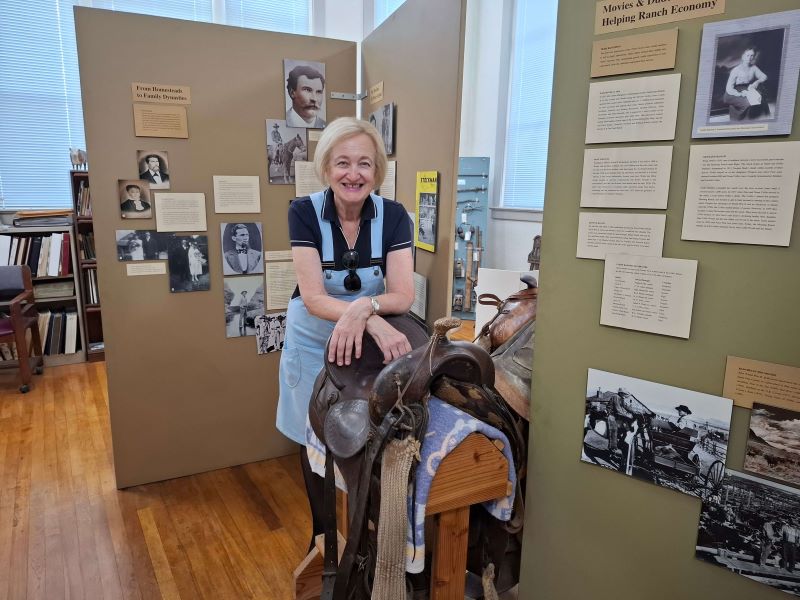
The author in the Patagonia Museum
Community life revolves around the backyard of a small bar, a beloved gathering spot for all generations — even the dogs have their usual places there. On weekends, the bar hosts live music. I had the chance to hear the band Dust from Tucson, which skillfully blends honky-tonk soul with a modern twist. Inspired by both classic and contemporary artists, they play upbeat, rhythmic songs filled with energy, prairie sounds, and the timeless spirit of the desert.
Coincidentally, the singer’s name is Chris Kabisch (Kabić). Although he’s not sure where his ancestors came from, I’d say his roots could be from Knin. The band plays solid western-country music, and the gathering lasted from 6 to 8 p.m., until it was time for children and dogs to be taken home. After that, only a few older locals stayed behind to continue chatting over a beer.
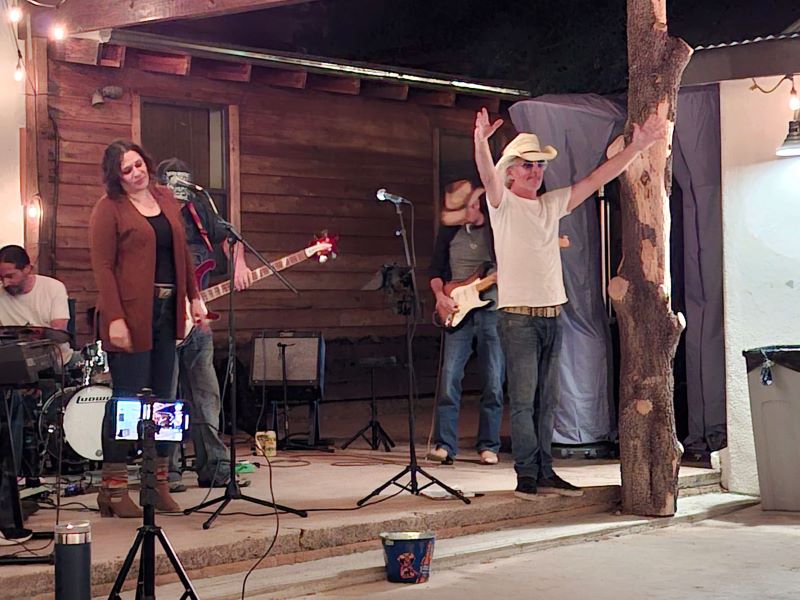
The Dust
My hosts were an elderly couple, Mary Jane Pottebaum and Tom Bartholomeaux, owners of the Spirit Tree Inn B&B, located on a picturesque farm full of charming details. Every morning, after feeding their livestock — including a horse that’s 31 years old — they prepare a homemade breakfast for guests. They proudly show off a barn built in 1830, dating back even before the American Civil War. That night, for the first time in ages, I saw a sky full of stars again.
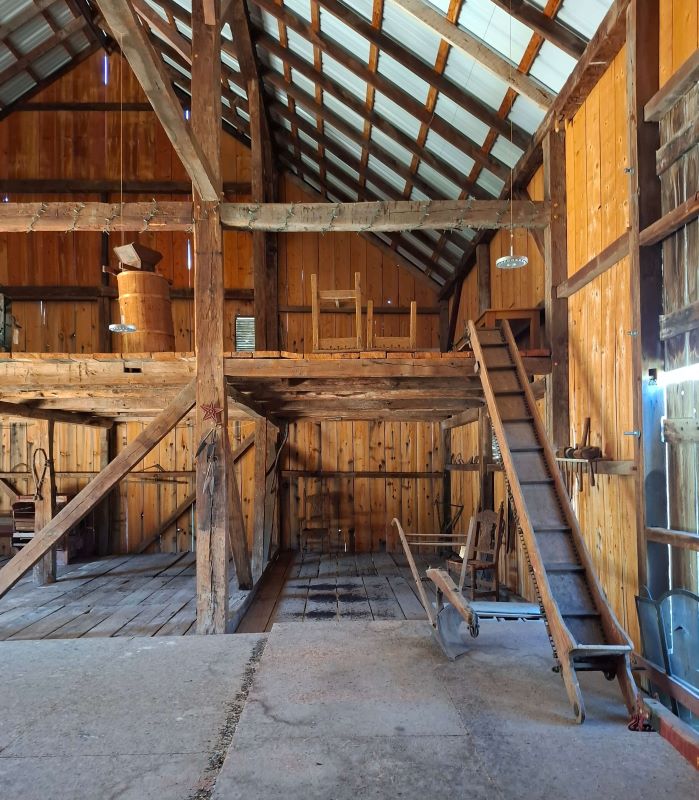
Barn built in 1830
The warnings I had heard in Los Angeles about supposed hordes of refugees from Mexico and the dangers of the border region proved completely unfounded. I saw nothing of the sort, even though the border is indeed very close. When I mentioned in Patagonia that I was flying from Tucson to Los Angeles, everyone just shook their heads: “Too many people.” And indeed, although I love California, little Patagonia won me over with its simplicity, sense of community, and slower pace of life — a place where people come to watch birds and rediscover a peace long lost in big cities.
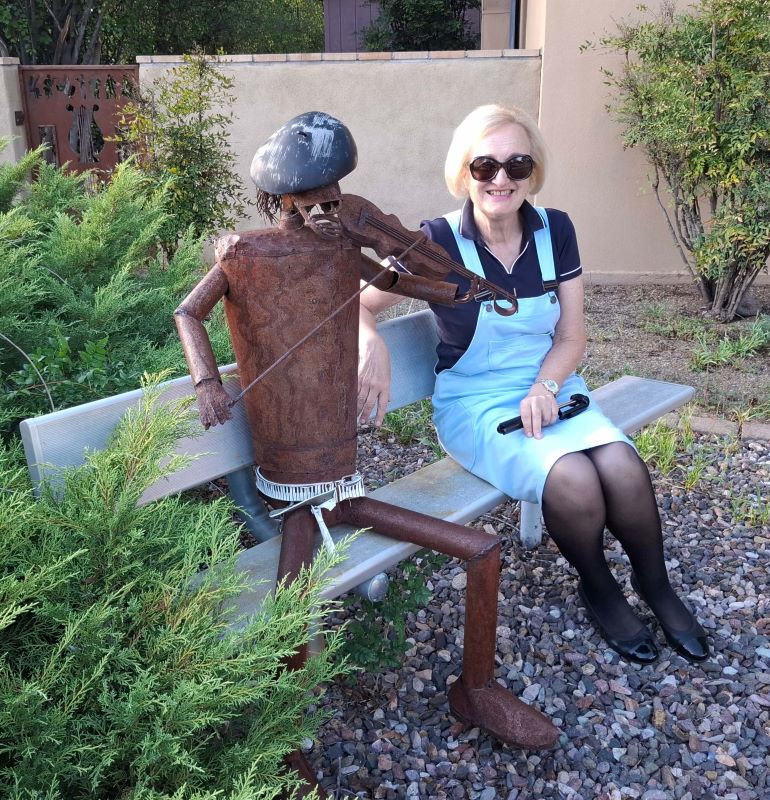
The author in front of the theatre in Patagonia
The Author: Branka Bezic Filipovic